
Sodium-Ion Home Storage: Salt vs. Lithium in the Backyard Battery

The Subterranean Mineral Dilemma
For the past decade, home solar independence has carried an unspoken contradiction. While capturing sunlight on a cedar-framed roof is pure ecological alchemy, storing those kilowatt-hours has relied almost exclusively on extractive mineral supply chains: lithium brine evaporation in fragile South American salt flats and cobalt seams mined under severe ecological and human strain. We traded fossil-fuel emissions for mineral scarcity.
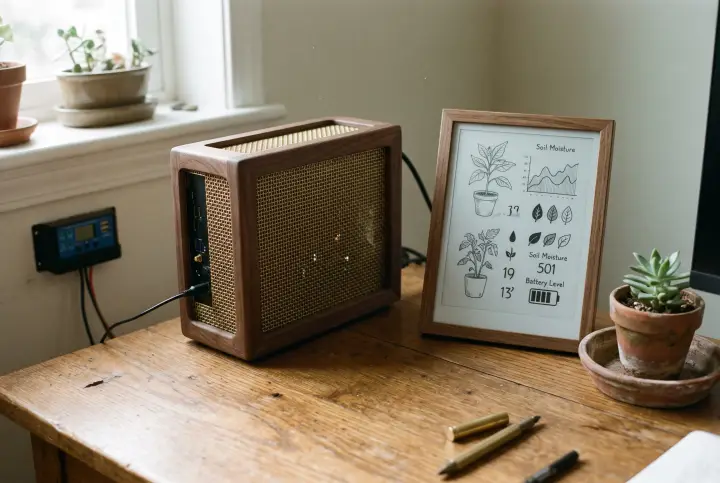
By 2026, stationary domestic energy storage is breaking free from that bottleneck. A stationary battery mounted to a basement stud, garage wall, or utility shed does not need the hyper-dense, lightweight chemistry required by electric vehicles or smartphones. Your home breaker panel does not care if an energy bank weighs forty pounds more—it cares whether the chemistry is fire-safe, whether it functions when temperatures plunge below freezing, and whether it uses earth-abundant minerals that respect the soil.
This is where Sodium-Ion (Na-ion) chemistry enters the homestead circuit. It is one more option on top of the renewable energy sources already available at household scale.
Chemistry Comparison: Sodium vs. Lithium
Derived from simple table salt and soda ash, sodium ions function as the charge carriers in a crystal matrix that mirrors lithium-ion, but without the geopolitical and physical liabilities.
| Attribute | Sodium-Ion (Na-ion) | Lithium Iron Phosphate (LFP) |
|---|---|---|
| Primary Raw Resource | Abundant sea salt / soda ash (NaCl / Na₂CO₃) | Mined lithium carbonate (Li₂CO₃) |
| Cathode Transition Metal | Earth-abundant Iron, Manganese, or Vanadium | Lithium, Iron, Phosphate |
| Anode Current Collector | Recycled aluminum foil | Heavy mined copper foil |
| Thermal Runaway Risk | Extremely low (chemically endothermic and stable) | Low (requires active BMS thermal cutoffs) |
| Operating Temperature | -20°C to 55°C without internal pre-heaters | Sluggish below 0°C; charging disabled at freezing |
| Cell Cost Trajectory | $60 – $80 per kWh (IEA Sodium-Ion Analysis) | $90 – $130 per kWh |
| Zero-Volt Transport Safety | Discharges safely to 0.0V (zero transit hazard) | Irreversible cell damage if dropped below 2.0V |
The Homestead Advantage: Cold Resilience & Copper Elimination
Beyond ethics and raw material abundance, sodium-ion technology introduces two practical engineering breakthroughs for self-reliant homeowners, the same people who might be planning an ecological and self-sufficient house:
- The Aluminum Anode Shift: Lithium ions naturally alloy with aluminum at low voltages, forcing battery manufacturers to use expensive, heavy copper foil on the negative anode. Sodium does not alloy with aluminum. A sodium-ion cell uses lightweight, cheap, and infinitely recyclable aluminum foil for both the positive and negative current collectors, dramatically reducing embedded manufacturing energy and stripping mined copper out of the bill of materials.
- True Frost Immunity: Anyone with an uninsulated outdoor utility room or solar shed knows the winter headache of lithium batteries: once ambient temperatures drop below 0°C, the BMS blocks charging to prevent destructive lithium plating. Sodium ions retain fluid ionic mobility through non-aqueous electrolytes down to -20°C, delivering over 85% of rated capacity without drawing parasitic power for electric heating pads.
Action Blueprint: Calibrating Your Inverter
Sodium-ion modular packs interface cleanly with standard 48V split-phase and hybrid solar inverters (including Victron, Sol-Ark, and Deye). Because sodium-ion cells operate at a nominal voltage of approximately 3.0V to 3.1V (compared to 3.2V for LFP), verify that your inverter firmware allows custom user-defined voltage profiles:
- Absorption / Bulk Voltage: Set to 57.6V (3.60V per cell across a 16-cell series bank).
- Float Voltage: Calibrate to 54.4V (3.40V per cell).
- Low-Voltage Cutoff: Program to 32.0V (2.0V per cell). Unlike lithium chemistries, which experience catastrophic copper dissolution if over-discharged, sodium cells can dip to deep depletion without irreversible degradation.