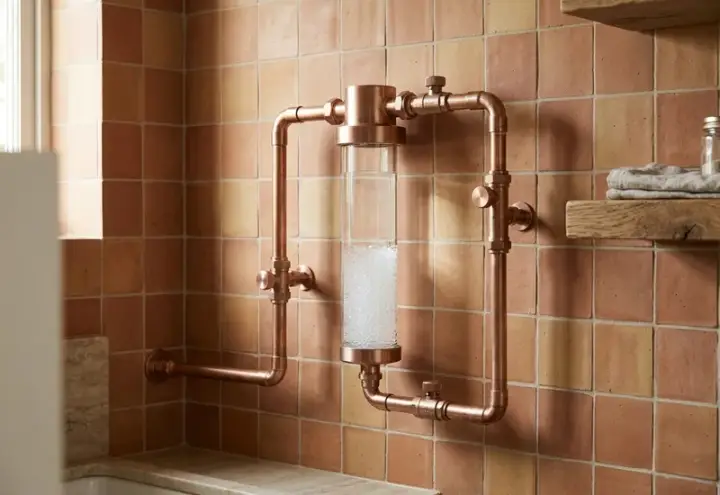

The Laundry Drain Defense: Intercepting Synthetic Microplastics at the Tap
The Domestic Fiber Leak
Every time a polyester fleece, nylon activewear shirt, or synthetic acrylic blanket spins through a standard wash cycle, mechanical agitation tears microscopic plastic filaments from the weave. A single domestic laundry load sloughs off between 100,000 and 700,000 synthetic microfibers—measuring less than 5 millimeters in length, with the vast majority under 50 microns in diameter.
Because municipal wastewater plants were historically engineered to settle heavy biological solids and neutralize pathogens, they act as permeable sieves for these buoyant, microscopic fibers. Up to 40% slip straight through clarifiers into rivers and coastal estuaries. The remaining portion settles into municipal sewage sludge that is subsequently dried and spread across agricultural farmland as bio-fertilizer, embedding non-biodegradable synthetic fibers directly into the subterranean food chain.
EcoGnome’s principle of domestic stewardship is straightforward: interception must happen at the wall discharge, before contaminated wash water disappears down the drain. It is a natural companion to the water filters that protect the water coming into your home.
Filtration Architecture: Vortex Separators vs. Depth Cartridges
Two primary mechanical filtration technologies are leading the retrofitting movement recognized in recent legislative efforts like the UK Parliament Microplastic Filters Bill:
| Filtration Type | Mechanical Mechanism | Retention Efficiency | Maintenance & Operating Cost |
|---|---|---|---|
| Pleated Depth Cartridge (e.g., PlanetCare) | Multi-layered 50-micron physical woven sieve | 85% to 92% of fibers down to 30 microns | Requires replacing or washing cartridges every 15–20 loads once backpressure builds. |
| Vortex Hydrocyclone (e.g., Matter Regen, CLEANR) | Fluid dynamics spinning water in a cyclonic eddy | 75% to 88% continuous fiber capture | Zero disposable cartridges; captured fiber lint drops into a removable clear collector jar. |
Step-by-Step DIY Installation Guide
Installing an external in-line microplastic interceptor requires basic hand tools and takes under thirty minutes:
- Locate the Standpipe: Disconnect your washing machine’s flexible corrugated discharge hose from the 2-inch PVC wall standpipe or laundry utility tub.
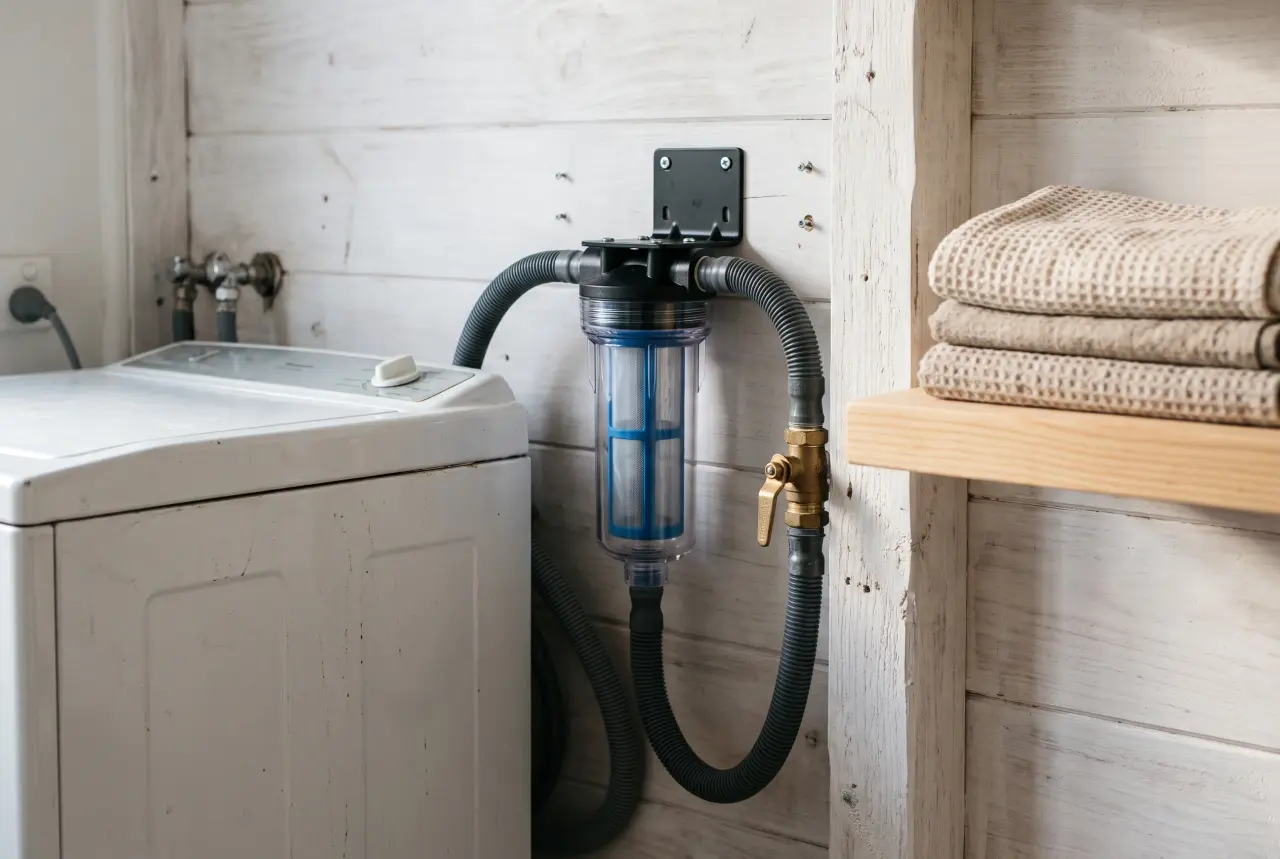
- Mount the Bracket: Fasten the heavy-duty filter bracket directly to a wall stud adjacent to the machine. Ensure the top of the filter housing sits level with or slightly higher than the top of the washing machine drum to prevent accidental gravitational siphoning during wash cycles.
- Plumb a Brass Three-Way Bypass Valve: Splice a 1-inch brass three-way ball valve directly between the washer discharge hose and the filter inlet. This allows you to bypass the filter completely when laundering 100% organic cotton, linen, or untreated wool, extending the operational life of your filter media. If you are building a wardrobe of such fibers, see our tips for buying organic clothing.
- Secure the Inflow & Outflow: Connect the discharge hose to the filter inlet barb using a 304-stainless steel worm-gear hose clamp. Run the reinforced outlet hose from the filter down into the wall drain pipe.
- Airtight Standpipe Boot: Seal the interface between the filter discharge hose and the PVC standpipe with a flexible rubber compression gasket to prevent sewer gas backflow.
Collection Hygiene: The Dry-Scrape Rule
Never rinse your captured filter mesh or cyclone jar under running tap water—doing so instantly sends the concentrated fiber mass right back into the municipal water system you are trying to protect.
Instead, allow the filter screen to air-dry completely. Once dry, peel the dense felted microfiber lint cake from the mesh and discard it into the dry solid waste bin for sealed landfill containment, or store it in an airtight glass jar for local textile recycling drop-offs.