
Digital Permaculture: Building an Offline, Low-Wattage Homestead Server
The Invisible Cloud Footprint
We rarely associate a digital tap on a smartphone with open smokestacks or river depletion. Yet in 2026, the explosive expansion of hyperscale artificial intelligence clusters and streaming server farms has turned digital infrastructure into one of the fastest-growing consumers of base-load electrical power and evaporative cooling water on Earth. A routine cloud-assisted garden sensor sending continuous uncompressed video frames to remote data centers consumes far more lifetime energy than the physical manufacture of the sensor itself.
Digital Permaculture applies core ecological design principles directly to personal technology:
- Produce No Waste: Eliminate continuous background network pings and bloated cloud-dependent subscriptions.
- Use Small and Slow Solutions: Prefer an ultra-efficient 5-watt local microcontroller over an 800-watt remote hyperscale pipeline.
- Integrate Rather than Segregate: Let home telemetry and automation live directly on your local network, resilient against internet outages and utility grid interruptions.
Hardware Architecture: The 5-Watt Homestead Stack
You do not need a loud commercial server rack to operate intelligent home systems. A robust, private domestic hub runs cleanly on low-voltage DC hardware:
| Hardware Component | Specification | Operational Role | Energy Draw |
|---|---|---|---|
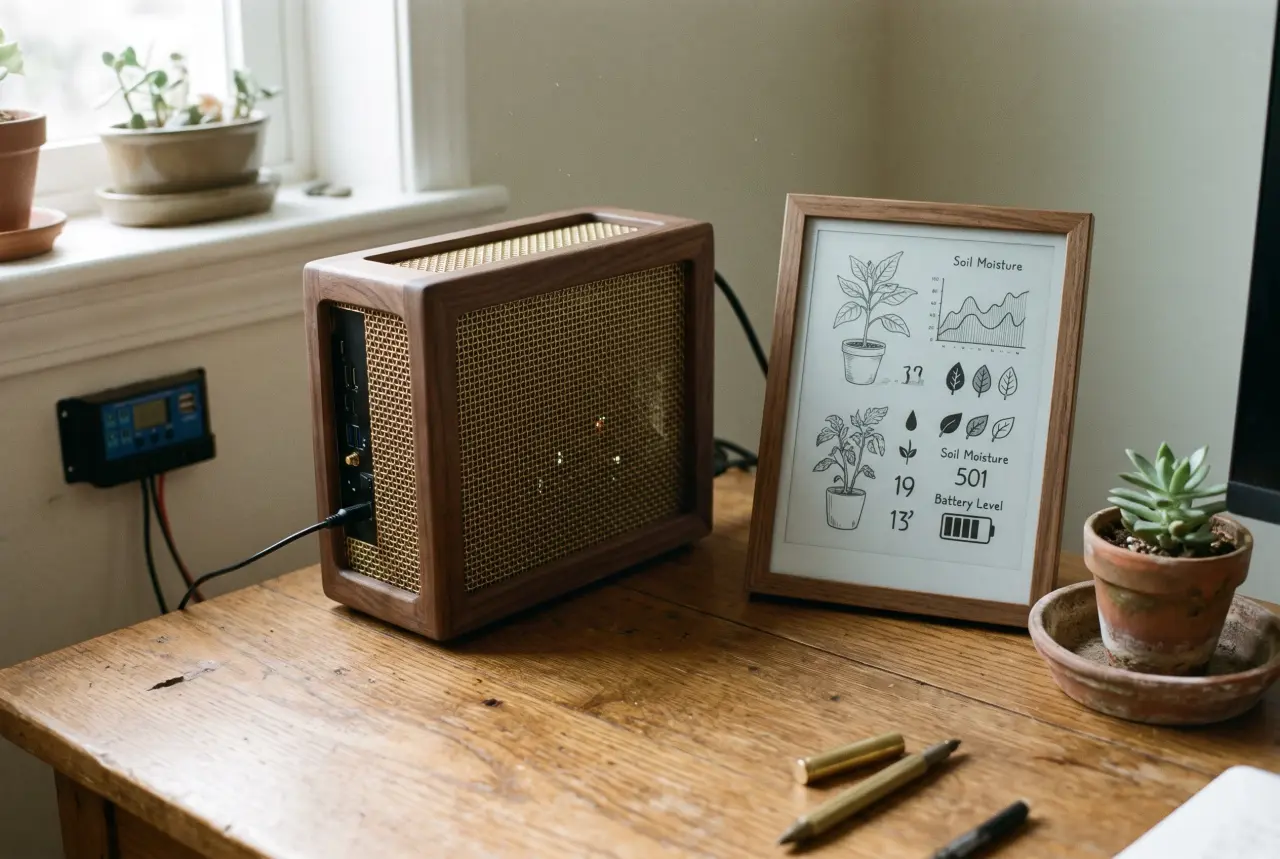
| Processor & Board | Intel N100 mini-PC or Raspberry Pi 5 | Local server hosting Home Assistant and Mosquitto MQTT broker. | 4.5W idle / 9W peak |
| Native DC Power Supply | 12V-to-19V native DC buck converter | Wired directly into the homestead's solar battery bus, avoiding inverter AC idle conversion losses. | 94% conversion efficiency |
| Local Edge-AI Engine | Quantized 1.5B–3B parameter LLM / Vision model | Local offline plant disease diagnosis, weather pattern synthesis, and heating schedules on CPU/NPU. | Zero external API calls |
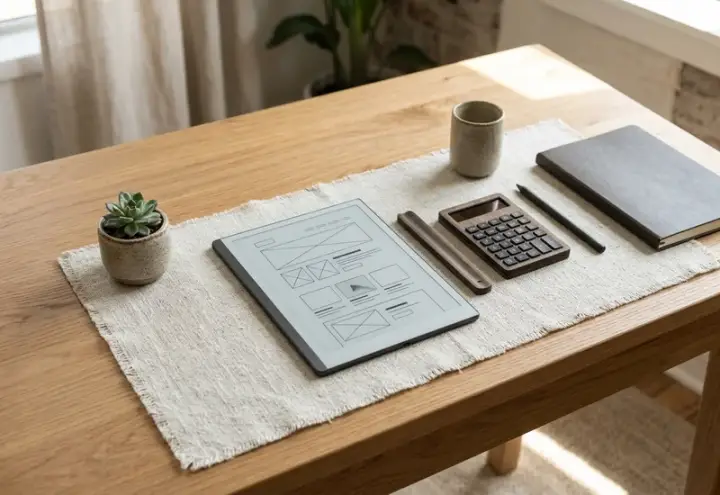
| Ambient Status Display | 10.3" Bistable Electrophoretic (E-Ink) panel | Ambient kitchen dashboard framed in reclaimed oak, updating cistern and battery reserves twice hourly. | 0.00W static draw |
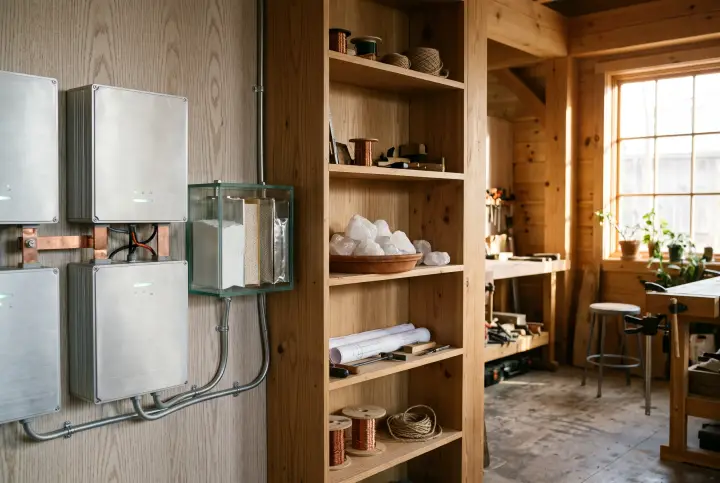
That solar battery bus can be fed by the salt-based cells described in our post on sodium-ion home storage.
Local Intelligence Without Cloud Leaks
Rather than streaming private household data to remote corporate servers, local edge intelligence processes information directly at the homestead threshold.
By running lightweight quantized neural networks locally, an open-source camera at the greenhouse doorway can identify powdery mildew on tomato foliage or detect pests without transmitting a single byte over the public internet. If the fiber line to your home is severed during a winter storm, the local server continues to monitor rainwater levels, modulate wood pellet stove feed rates, and manage battery state-of-charge without interruption. For more on that kind of heating, see our ecological and sustainable heating options.
The E-Paper Ambient Dashboard
Backlit LED and OLED monitors contribute to indoor light pollution, visual fatigue, and continuous phantom power drain. An electrophoretic e-paper display offers a natural alternative.
Because micro-capsule pigments require electric current only when physically reorienting, an e-ink display consumes power for approximately 1.5 seconds during a screen refresh—and absolutely zero power while displaying static data. Dressed in a simple timber frame, it sits on an entryway shelf or kitchen counter like a hand-pressed botanical print, grounding your home's energy and water metrics in quiet, daylight-reflected clarity.